Featured image for Triggering Veeam Backups on Linux with SystemD

Triggering Veeam Backups on Linux with SystemD

Reading time: 3 minutes
2026-01-28

Veeam Backup is, in my opinion, one of the best free backup solutions available. The Linux version particularly shines with its ability to create snapshot backups of Ext4 partitions.

Unfortunately, the Linux version has a major drawback compared to its Windows counterpart: backup scheduling is extremely limited. You can only specify the day and hour for when backups should run. If the computer is asleep or powered off at that time, the backup won’t execute and, more importantly, won’t be rescheduled.


Featured image for 2026: The Year Windows Annoyed Us Too Much

2026: The Year Windows Annoyed Us Too Much

Reading time: 5 minutes
2026-01-03

In the last few days, I’ve read several blog posts talking about how 2026 is the year of the Linux desktop, and that’s a great thing. However, I think many of the headlines and posts on this topic should have a different title: “The Year Windows Annoyed Us Too Much.”

A History of “Verschlimmbesserung

For years now, Microsoft has been steadily making its operating system worse through supposed “improvements” (Verschlimmbesserung). Windows Vista was a difficult step because many computers weren’t ready for it yet, but there was at least technical progress that was successfully concluded with Windows 7.

Featured image for The Fediverse, Meta, and Threads

The Fediverse, Meta, and Threads

Reading time: 4 minutes
2023-07-04

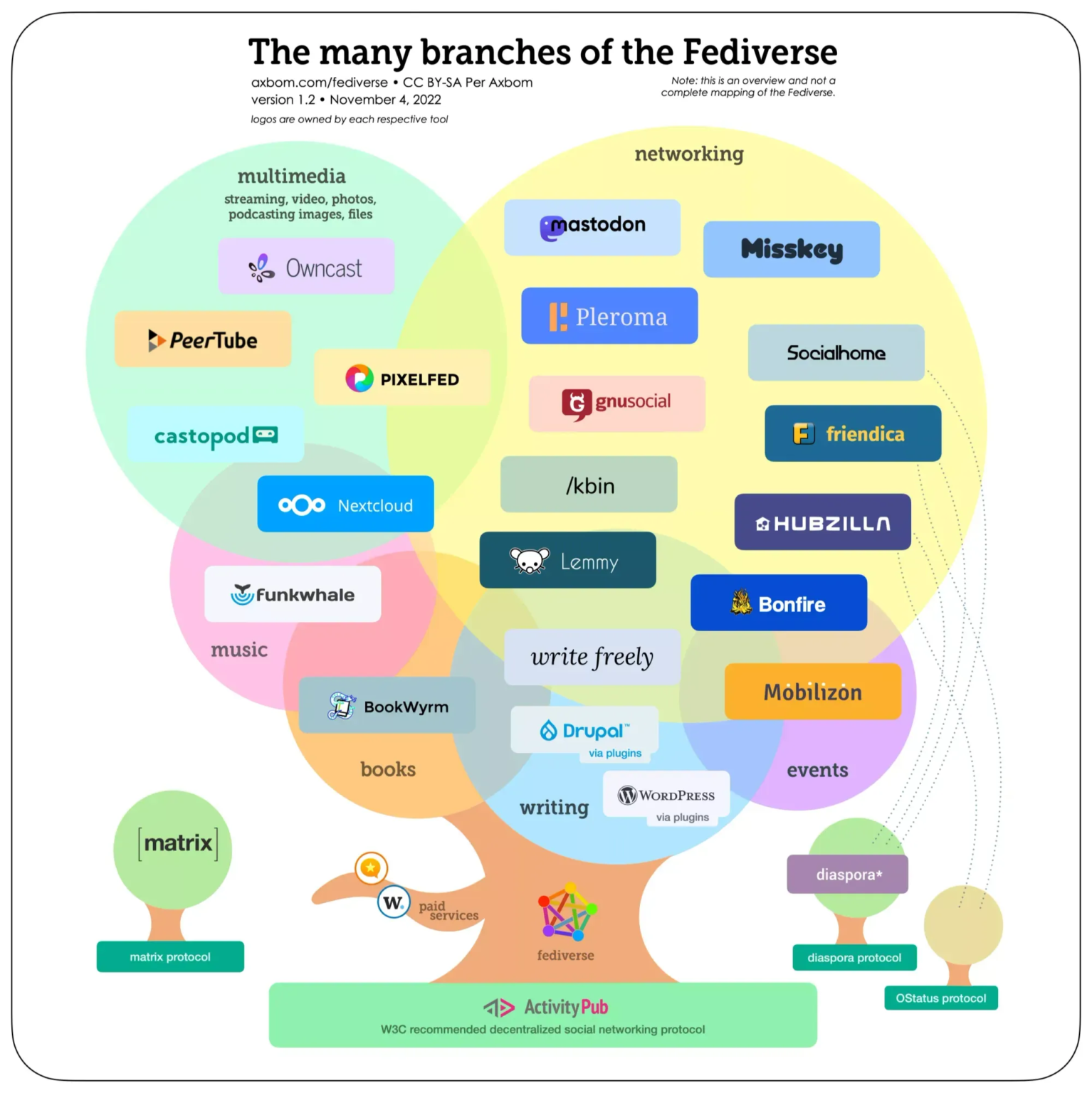
The Fediverse is growing. Spurred by the problems at Twitter and Reddit, more and more users are now venturing onto alternative platforms. Especially Mastodon, Lemmy, and KBin have experienced an explosive surge in users recently. This didn’t happen without problems, of course, but it at least shows that there might be a way not to throw all data into the gullets of large corporations.

The many branches of the Fediverse

With the ActivityPub protocol as the glue between all Fediverse projects, the formation of silos should finally come to an end. Everyone can talk to everyone: Mastodon with Pixelfed, Pleroma with PeerTube, Lemmy with KBin. The boundaries between projects are blurring, even if sometimes content from one software makes no sense in the interface of another. But this is where the problem begins.

Featured image for New is Always Better (?)

New is Always Better (?)

Reading time: 2 minutes
2021-09-16

I have something to confess. I have a problem. I’m not sure if my problem has a name, so I’ll give it one. I call it “Neoprogrammism.” What is it? Well, it’s best explained with an example.

Example 1

I’m now well-versed in Python and Django from several projects, but I’m not as familiar with JavaScript. There’s a new project to generate APIs directly from the database schema that relies entirely on JavaScript? I’ll take it!

Featured image for New Design for the Blog

New Design for the Blog

Reading time: 1 minute
2020-02-20

The era of downloaded and adapted designs is over. My first own design sees the light of day. I call it cperrin-hugo-theme. Poetic, isn’t it?

But that’s not the only new thing. I came up with my own brand-hot and ultra-creative logo to make the crowds scream.

Featured image for Ansible: DevOps Made Easy

Ansible: DevOps Made Easy

Reading time: 2 minutes
2017-09-08

The problem is quite old: A large number of servers need to be set up or homogenized, ideally with minimal effort. This problem has been solved several times. So-called orchestration tools execute specific commands on multiple systems based on predefined instructions.

Examples of such tools are Puppet, Chef, or CFEngine. However, these representatives have one major disadvantage for me: they require a client to be installed on the remote side for execution.

This is where Ansible comes in. Ansible uses only an SSH connection to execute scripts or playbooks on the clients.